Showing posts with label smartphones. Show all posts

Microsoft’s free Windows Phone license for Lava, Karbonn could dent Android market share


Last month, reports suggested that Microsoft was looking to slash its license fee to get more manufacturers on board, especially local manufacturers in growth markets such as India. And now it looks like the company is going to do one better.

A report in the Times of India quotes sources from Indian phone companies saying Microsoft has agreed to give them the OS without any licence fee. This after companies such as Lava, Karbonn and Micromax have been known to be in discussions with Microsoft to launch low-cost devices. Last month, Lava and Karbonn announced plans to produce Windows Phone devices. Xolo too is looking at Windows Phone and has already released plans for a Windows tablet. So obviously Microsoft has been making headway with companies here and the Indian connection with Satya Nadella now being the CEO must surely have helped in discussions, but as the report says, “the agreements were clinched only when Microsoft agreed to remove the licence fee.”
Microsoft has been known to charge between $20 and $35 per unit produced from companies which make Windows Phone devices. But in India even a low fee was not acceptable to manufacturers given Windows Phone’s low market share. Popular belief is that Android is free, but manufacturers still have to pay a fee to get access to Play Services and the Play Store. While Indian companies do not pay this fee directly (they are passed on to Google by the Chinese ODMs these companies use), they still have to absorb the cost. In the case of Android, they are more than happy to do this, given the demand and the market share of the OS, but that’s not the case with Windows Phone. Which is why Microsoft had to sweeten the deal.

“Free Windows Phone is part of a strategic partnership. For both Microsoft and us, it is an experiment. Windows Phone still doesn’t have lot of appeal in the market but now that it doesn’t have any licence fee, it becomes easier for us to experiment with it,” one executive with an Indian phone company was quoted as saying by the paper.

But the deal is essentially a two-pronged attack on the growth of Android. For Indian companies, having Windows Phone products gives them another front to chip away at the market share of biggies like Samsung, LG and Sony, who are fully focussed on Android. That’s one way to curb Android growth and it’s a win-win for both parties.

Secondly, having more device options in the market will lead to competitive pricing, which will also boost adoption rate. Indian companies are known for their aggressive pricing models and if there’s a repeat of anything like the Android smartphone explosion, you could soon have a huge number of Windows Phone devices in the market, at very attractive prices.

Things are not all bright though; there’s still the app hurdle, which will only go away gradually, but at least this is a bold move. And having more devices will convince more developers about the chances of the OS. With much of India still an untapped market for smartphones, Microsoft is finally making some shrewd business calls that could end up boosting its market share.

Report by : Nikhil Subramaniam

HTC launches super-size HTC One max

HTC has announced the HTC One max which has a large 5.9-inch display and fingerprint scanner.

The HTC One max will be released later this month

The handset is an updated version of the HTC One, which won ‘phone of the year’ at the T3 Gadget Awards this year.

It follows the release of Apple’s iPhone5s which has fingerprint scan software, allowing people to lock or unlock the screen with their fingerprints.

It also allows users to swiftly launch up to three favourite applications, assigning each to an individual finger.

The smartphone benefits from the new HTC Sense 5.5 experience, which runs on top of Android 4.3

It includes a more social, personalised HTC BlinkFeed that can be further customised by topic categories.

The handset has new integration with content providers, including Instagram and Google+, and up to 120 articles can also be downloaded for offline viewing.

HTC has updated the HTC One’s video highlights functionality, and created a new Dual Capture camera feature, which allows people to capture memorable moments and their reaction to them by simultaneously shooting with the front and rear cameras.

The design is available in Glacial Silver and will be released worldwide from mid to late October.
Report by : Radhika Sanghani

SmartWallit: A device to keep track of your wallet


It is a smartphone anti-lost accessory that connects with your iPhone 4S, iPhone 5 or Android phones that support Bluetooth 4.0 or BLE.

SmartWallit is a device that allows you to keep track of your wallet. It will prevent you from leaving your wallet behind.

If you displace your wallet, you can make SmartWallit ring by using the APP to figure out the location of your wallet.

In addition, SmartWallit comes with a free APP for your phone, which records the time and place when you lost it.

The SmartWallit comes with only one button. This button has 3 important functions - enter into power on/off mode, cancel unnecessary warnings, and make the phone ring.

Not only can you place SmartWallit in your wallet, but you can also attach it to other items, like your house key. If you want, you can raise your pledge level to include a key ring, which gives you the benefit of also keeping track of your key.

The capabilities of Bluetooth give it a range of 30 m or 100 ft.

SmartWallit also has a buzzer, which ensures that you will be able to find it in any environment.

SmartWallit consist of high quality materials, including ABS, stainless steel, and organic glass.

Report by :

ITC judge says Samsung infringes key part of Apple patent


Samsung Electronics Co Ltd infringed a key portion of an Apple Inc patent by including a text-selection feature in its smartphones and tablets, an International Trade Commission judge said in a preliminary decision.

South Korean-based Samsung did not infringe portions of a second Apple patent that allows a device to detect if a microphone or other device is plugged into its microphone jack, the judge said in a decision that was issued on March 26 but kept confidential until late Thursday to allow the companies to redact sensitive business information.

The full commission must now decide if they will uphold it or overturn the judge's decision. A final decision is expected in August.

If it is upheld, the ITC can order any infringing device to be barred from importation into the United States. Apple has alleged that Samsung's Galaxy, Transform and Nexus devices, among others, were among those made with the infringing technology.

Apple had filed a complaint in mid-2011, accusing Samsung of infringing its patents in making a wide range of smartphones and tablet.

ITC Judge Thomas Pender said in a preliminary decision in October that Samsung infringed four Apple patents but did not violate two others listed in the complaint. There had been seven listed initially, but one was dropped during litigation.

The full commission then said it wanted the agency's judge to take a second look at portions of two patents where he had found that Samsung infringed. That remanded decision, issued in late March, was unsealed on Thursday.

Samsung is the world's largest smartphone maker, while Apple is in second place, according to Gartner Inc, a technology research firm.

Apple is waging war on several fronts against Google Inc, whose Android software powers many Samsung devices. The legal battles between Apple and Samsung have taken place in some 10 countries as they vie for market share in the booming mobile industry.

Google's Android software, which Apple's late founder Steve Jobs denounced as a "stolen product," has become the world's No. 1 smartphone operating system. Apple's battle against Google's Android software has dragged in hardware vendors that use it, including Samsung and HTC.

Samsung is also a parts supplier to Apple, producing micro processors, flat screens and memory chips for the iPhone, iPad and iPod. Apple has reduced orders from Samsung for chips and screens.

The case at the International Trade Commission is No. 337-796.

Report by : Reuters

Samsung announces its Smart Evolution Kit in India


Samsung first unveiled the Evolution Kit even before CES this year, and has now finally launched it in India. The Evolution Kit gives Samsung's 2012 Smart TV models the same capabilities as the company's newer 2013 models. The company hasn't announced the price or the availability for the device yet.

The Evolution Kit does this through enhancements in the CPU, memory and GPU, which give you faster speeds for browsing the Internet and let you multitask better when watching TV. In addition, Samsung’s Smart Interaction features such as voice control and motion control are enhanced, and once the Evolution Kit is attached to the slot, you get the 2013 version of the 2012 Smart Hub.

The Samsung launches its Evolution Kit for 2012 Smart TV models
Speaking at the official launch of the Evolution Kit, Robert King, Vice President Consumer Electronics, Samsung UK and Ireland, said, “The Evolution Kit is a truly innovative concept from Samsung that allows consumers to enjoy the latest features and services every year without having to purchase a brand new TV.”

The Smart TVs compatible with the Evolution Kit include Samsung's 7000, 8000, and 9000 models. These include some of the TVs the company launched during CES this year, including the F7500 LED 3D TV, the F8500 series plasma, and the F9500 OLED TV.

Each of these comes with a Smart Evolution slot that allows you to update the hardware and software. Adding the Evolution Kit to the 2012 Smart TVs will show a redesigned Smart Hub, enhanced Voice Interaction and Motion Control as well as add a quad-core chipset for increased processing power.

The Samsung Smart Hub design too has received an update and is said to have become more intuitive. Content has been categorised into five sections that can all be navigated on one screen:
  • ‘On TV’ for Live TV
  • ‘Movies & TV Show’ for VOD contents
  • ‘Apps’ for various Applications
  • ‘Social’ for SNS contents sharing function
  • 'Photos, Videos, & Music’ for personal content.
Report by : Shunal Doke

HTC One to be the only 'One' device this year: Report


HTC introduced its much famed One series devices at last year's Mobile World Congress, which consisted of the HTC One X, One S and One V. More recently, these were joined by the One X+, the One SV and the One VX. But this year, the newly announced HTC One will be the only 'One', according to Omio.

The mobile news blog cashed in on the opportunity to speak with Phil Roberson, head of HTC UK and Ireland and directly cut to the chase by asking him if there were multiple One handsets expected this year.

In response to their question, Phil simply stated, "HTC One is the flagship device. Last year we had the X and the S, where people had different personal preferences between the two. We just said, let's just create one flagship device for this year."

The blog also claims that it had confirmation that the codename HTC M7 was always meant to be the "internal name of the handset" and not the official one.

In order to spell things out even more clearly, folks at Omio rephrased the question again, "So, there won't be any more HTC something's this year?" Roberson made it crystal clear once again replying, "No; this is The One".

So that's that. The only high-end Android smartphone from HTC this year is the HTC One. It does make us wonder, what about the 35 HTC device code-names that were leaked earlier last month? While some of them were known, the mysterious ones included Pulse, Apollo, Era, PDLU, Jet and CP3. The M7 aka the HTC One was spotted with 8 different names. But hearing it from the horse's mouth, it seems these were just rumours and nothing more.

The HTC One was made official last week at a special event hosted by the Taiwanese company. The smartphone comes with a 4.7-inch full-HD display (468ppi) sporting an aluminium unibody. It is powered by a 1.7GHz quad-core Qualcomm Snapdragon 600 processor alongside 2GB RAM. Both front and rear cameras come with full-HD video recording capabilities as well as Optical Image Stabilisation (OIS). HTC One is powered by a 2,300mAh battery.

HTC One is skinned with the new Sense 5.0 UI atop Android 4.1 Jelly Bean and comes with some rather nifty features like HTC Zoe (automatically capture up to 20 photos and 3-second videos), HTC BoomSound (enhanced sound thanks to dual frontal stereo speakers powered by built-in amplifiers) and HTC BlinkFeed (live updates on home screen). The power button doubles up as the IR port that converts HTC One into a remote control.

HTC One will come in Grey, Black and Red colours with 32GB and 64GB storage options, but without expandable storage. Connectivity options include Wi-Fi 802.11 a/ac/b/g/n, Bluetooth 4.0, GPS, NFC, Infrared and Micro-USB.

The device will be available globally through more than 185 mobile operators and major retailers in more than 80 regions and countries beginning in March. India is expected to be on the list of countries with Reliance Communications listed as one of the 185 operators though there's no official confirmation from HTC on the exact date of HTC One India launch.

The HTC One is available on pre-order now in United Kingdom via Clove Mobile and will likely start retailing from March 15. The online retailer has shared unlocked price of 425 pounds plus VAT for this smartphone (510 pounds including VAT). HTC One will be available with multiple carriers such as T-Mobile, AT&T and Sprint in the US.

Report by : KS Sandhya Iyer

Who is the most popular Indian smartphone vendor?


The latest ad for an Indian smartphone features a young Indian cricketer known as much for his aggressive attitude as for his performance and future leadership prospects. This is precisely the image that Indian smartphone manufacturers and vendors would want to convey. In many ways, the choice for this particular cricketer can be read as a veiled message to the incumbents of the Indian smartphone market – that a change of guard is in the offing. Unlike many other sectors, where international brands lord over the market through their Indian subsidiaries, the Indian mobile phone market has seen a slew of homegrown vendors enter the fray over the last couple of years. By cleverly playing the price game in one of the most price-sensitive markets in the world, these local vendors have been able to garner market shares that threaten the current top cats.

Their tactics of selling comparitively lower-spec'd devices at even lower price bands, and then swiftly moving up the value chain, have meant that customers are flocking to them in droves. Buyers who loathe to fork out any five figure sum for a 'desi' brand seem to be ready to give the Micromaxs and Karbonns a try.

The top Indian brands

The question is – who among these will finally emerge as the strongest contender to take on the international pedigree brands. Despite all its diversity and volume, the Indian market tends to favour a duopoly in any sector. There is no reason why the smartphone market should be any different.

Here's a quick look at the local vendors who could be the big Indian smartphone success story, if you are ready to buy their wares.

Micromax Canvas A100 looks similar to the Galaxy Nexus

Although it started off with the Java run handsets, Micromax generated quite a buzz when it stepped into the smartphone arena with Superfone Canvas A100 (which looks deceptively similar to the Galaxy Nexus) featuring a 5-inch, dual SIM, 1GHz Processor, 5MP camera and powered by Android Ice Cream Sandwich OS. A price point of less than Rs 10,000 ensured that the device was an instant hit.

Karbonn Mobiles spiced things up with the A7, which featured a 3.5-inch display, 5MP camera, 800MHz processor and powered by Android Gingerbread OS. The device was priced a little over Rs 7,000, and in our review, we felt that it was a worthy option for a budget smartphone.

The 5c resembles the Samsung Galaxy Note to quite an extent

The Stellar range from Spice mobiles featured some good phones, but the one that stood out was the Stellar Mi-425. This dual-SIM phone running on the Android Gingerbread OS featured a 4-inch display, 1GHz processor and a 5MP camera. Clocking decent performance and a price of under Rs 10,000 made it quite an attractive package.

iBall too launched a slew of devices over the last couple of years, but the one that impressed us was Andi 5C. Deceptively similar to the Samsung Galaxy Note in terms of looks, this 5-inch phone running on the Android Ice Cream Sandwich has a 1GHz processor and a 5MP camera. Priced under Rs 15,000, it presented a great option for those looking for an affordable phablet.

XOLO A800

Another brand that quite grabbed headlines was WickedLeak that launched tablets and more recently, smartphones. While its Wammy Desire tablet found many takers due to its stellar performance and a price tag of little over Rs 6,000, we hope that its Wammy Sensation smartphone too delivers. The dual-SIM Sensation will sport an impressive 12MP camera, 4.7-inch display and will run on Android 4.0 Icecream Sandwich OS. The price tag of Rs 16,000 makes it look promising.

The recently launched Android ICS-based Lava Iris 501, which sports a 1Ghz dual core processor, 5-inch display and 5 MP camera is another device priced under Rs 10,000 that could ring up decent sales for the Noida-based vendor. Xolo, the latest entrant in the market, launched its first phone X900 powered by Intel’s Medfield SoC and is back with the recently launched XOLO A800. Priced under Rs 12,000, the phone features dual core 1GHz processor, dual SIM, 4.5-inch display, 8MP auto focus camera and will run on the Android Ice Cream Sandwich. Needless to say, this is one device that has created quite a buzz.

Report by : Team Tech2

Lenovo eyeing RIM acquisition or alliance


Research In Motion (RIM) has once again become the target of acquisition talks. This time it is China’s Lenovo, which is looking at a buyout of RIM or at the very least entering a strategic alliance.

Lenovo’s CFO Wang Wai Ming told Bloomberg at the World Economic Forum meeting in Davos, Switzerland that the Beijing company is looking at the BlackBerry maker as an acquisition target or strategic alliance partner. “We are looking at all opportunities–RIM and many others. We’ll have no hesitation if the right opportunity comes along that could benefit us and shareholders,” he said. Wong added that his company has already spoken to RIM’s executives and bankers about various permutations and options to enter a strategic alliance, though exactly when Lenovo will put in a bid, if at all, has not been revealed.

BB10 apps may soon be seen on a Lenovo device

Ming’s comments come at a time when RIM CEO Thorsten Heins said this week that RIM is still undergoing a strategic review, with the possibility of licensing BB10 to other manufacturers and selling its hardware production unit. However, Heins was quick to point out that no decision will been taken till the company gauges the reception that BB10 will get when it launches on January 30. After enduring multi-year losses for the past few years, RIM’s shares have picked up before the imminent launch of BB10.

RIM has been subject of takeover speculation for some time now and the company itself has looked at options after its market share fell in the face of iOS and Android. Other companies have been rumoured to take over RIM over the past two years. Amazon was the first such company when rumours surfaced back in 2011, while in 2012, Samsung denied that it was going to acquire the Canadian company.

Lenovo’s bought IBM’s PC unit in 2005, but the global PC market is shrivelling and has kept the Chinese company from growing steadily. Since that acquisition there is a clear bifurcation in Lenovo’s PC division, with the Thinkpad line inherited from IBM and the Ideapad series, which is a result of the company’s own research and development. Lenovo's stranglehold on the business notebooks market could bode well for RIM.

A marriage between Lenovo and RIM could spell a change in fortune for the latter. Lenovo’s strong position in the Chinese market, insider knowledge of the world’s most populated country and its pedigreed manufacturing capabilities mark it out as a great suitor for RIM. It would help BlackBerry establish a strong base in Asia and gain a foothold in the burgeoning smartphone market in the continent.

A takeover of RIM by a Chinese company, however, does raise security questions, especially when in July last year, Heins said that the company had pulled back from expanding its China operations due to concerns over possible breach of sensitive networks. Though a deal focussed on just hardware instead of a full-scale buyout would not in all likelihood have any problems passing telecom regulations.

This isn’t the first time that Lenovo is in news lately for a possible acquisition. This month it completed the buyout of Brazilian consumer electronics maker CCE and among five acquisitions in 2011, the purchases of German electronics company Medion and the PC unit of Tokyo’s NEC Corp stand out.

Report by : Nikhil Subramaniam

iPhone the Q4 smartphone champ says Kantar as Android deserters grow


Apple’s iOS clung to the top-spot for smartphone platform share in the US in Q4 2012, new research suggests, maintaining more than half of the market, though the gap between AT&T and Verizon sales has narrowed. iPhones made up 51.2-percent of the US smartphone sales, Kantar World Panel claims, while Android dropped a little to 44.2-percent, a fall of just 0.6-percent year-on-year.

In comparison, Apple saw growth during the period, rising from 44.9-percent of the same market back in 2011. Windows Phone grew slightly, from 2.2-percent to 2.6-percent, but according to the research firm’s figures, RIM was the biggest marketshare loser, its BlackBerry platform dwindling from 6.1-percent in 2011, to just 1.1-percent in 2012.

As for share by carrier, AT&T maintains the top-spot for smartphone sales, though only just, with 33.3-percent of the market. Verizon has closed the gap, however, being just 1.3 points behind. Together, the two carriers represent the lion’s share of smartphone sales.

Interestingly, the raw figures don’t quite tell the whole story. According to Kantar, more than a third of new iOS users were transitioning from another smartphone platform, and Android deserters represent a greater chunk of those moving across. “19-percent of iOS sales over the last year were derived from Android users, compared to 9-percent in 2011″ analyst Mary-Ann Parlato said of the stats, with the trend most evident among Verizon subscribers, where 30-percent of iOS sales were of former Android users.

Report by : Chris Davies

Smartphones becoming a popular shopping device: Study


As per the findings of a recent study, roughly 32 percent of smartphone users in India used their devices to make purchases. While 32 percent affirmed that they would pick their smartphones, 23 percent chose the laptop or desktops as the next choice. "It goes on to show how connected the mobile device is and plays a significant role in a purchase decision," Havas Media Asia Pacific chief executive Vishnu Mohan said quoting the study 'Role of the connected device in the branding and buying cycle of a consumer'.

15.7 percent of those wanting to buy a smartphone, and 16 percent of tablet buyers chose not to visit a physical store for purchasing them.

Shopping using smartphones getting popular (Image credit: Getty Images)

The report found that roughly 80 percent of respondents used their smartphones as their primary device, while 13 percent considered the laptop or desktop, and 7 percent the tablet. "As consumers are increasingly spending more time on their mobile devices and use them for different purposes, brands have more opportunities to interact meaningfully with their customers," says Havas Media India and South Asia chief executive Anita Nayyar.

The survey was done by Mobext India, and arrived at the findings after testing a sample of over 2,800 respondents in the country. The study also found that an average connected Indian consumes 9 hours of media, with smartphones constituting nearly 44 per cent of it. "It has been found that mobile device purchase cannibalises other media consumption habits, as 21 per cent of smartphone users prefer not to read a printed book. While 22 per cent prefer to watch less TV, 16 per cent reduce time on the Internet via a laptop and 30 per cent of tablet users read fewer printed books," the report said.

On a related note, Google, along with IPSOS and MMA (Mobile Marketing Association) released a report revealing the pattern of smartphone usage, globally. To begin with, Indian smartphone users were found to be more active than their US counterparts. However, India has less than 50 percent of the number of smartphone users in the US. These days a smartphone isn’t just a calling and SMSing medium, and this survey will vouch for that. Smartphones these days cover a much larger base, they're used for -- searches, news, watching TV, listening to music, and several other functions from an endless list. While tech savvy users know how to get the best out of their smartphones, there are several users who satiate themselves with just the basic functions that a phone has on offer. Not surprisingly hence, youth falling within the age bracket of 18 to 29 form the largest consumer bracket for smartphone usage.


Report by: ch2 News Staff

Windows Phone challenging RIM for third place in Europe

Android and iOS still dominate the smartphone markets, sharing 93 percent of sales in the U.S. and 83 percent in Europe.

Nokia's Lumia 900 is one of several new Windows Phones being introduced.

Microsoft's Windows Phone operating system is gaining on Research In Motion, a new study says, but it still has a long way to go before catching Android and iOS.

Windows Phone is vying with RIM for third place in Europe as low-end devices -- like the Nokia 610 -- drive sales in key markets such as Italy and France, according to a global smartphone sales report from Kantar Worldpanel ComTech.

But iOS and Android still make up the vast majority of sales in the region, sharing about 83 percent of the share in the big five European markets of Great Britain, Germany, France, Italy, and Spain, the report said. Their percentage is even higher in the U.S. at about 93 percent.

Google's Android operating system and Apple's iOS software have grabbed the lion's share of the smartphone market, but other players are vying to gain a piece as the smartphone market continues soaring. Microsoft has been pushing its Windows Phone operating system, but it hasn't gained much traction with users. However, that could change with the introduction of its revamped operating system later this month.

Dominic Sunnebo, Kantar global consumer insight director, said it's "highly likely" that Windows Phone will overtake RIM for the No. 3 spot in Europe before the end of the year due to "the momentum Windows 8 will bring towards the end of 2012."

Apple's iOS, Google's Android Jelly Bean and Microsoft's Windows Phone 8 are vying to be the top smartphone operating systems.

In the third quarter, Windows Phone had 5 percent market share in the five big European markets. A year ago, its share was 3.8 percent. RIM, by comparison, saw its market share drop to 6.4 percent from 12 percent in the year-earlier period.

In the U.S., Windows Phone was 2.7 percent of the market, while RIM was 1.7 percent.

Android, meanwhile, saw the biggest jump in Europe in the period, with its hold on the region soaring 20 percent to 69 percent. iOS slid 4.3 percent. In the U.S., Android retained the top position with 60 percemt of sales, with iOS following at 34 percent. However, Android's percentage was down 3.3 percent from the previous year while iOS climbed 9 percent.

Report by: Shara Tibken

How To Buy A Smartphone: What Apps Do You Need?


The basic question for smartphone buyers is: What can the device do? Everything else is window dressing. Apps tell the story. (Part 6 of a 6-part series.)

Knowing which smartphone is right for you is largely a matter of knowing what you want to do with it. If you are oriented toward productivity, an iPhone or BlackBerry may be best. Android is especially good at accessing information and keeping in touch. Windows Phone is good at organizing your life and personal contacts. What makes one platform stronger or weaker for certain kinds of tasks? The answer is apps.

Apps: Ecosystems & Native Features
The selection of apps is perhaps the primary reason why Apple has done so well with the iPhone. It fostered an app ecosystem full of productivity tools, personal data loggers, games, cameras, navigators, social networks, music and video services, and so on. Developers often create apps for the iPhone first because they know they can make money from iPhone users. It is rare to see an app available on Android but not on the iPhone (unless it is specific to something Android does). Apple’s App Store offers 700,000 apps. Not all of them are high-quality, but all the top apps are present and work well.

Android is not far behind, with 600,000 apps in its Google Play store. Like the App Store, Google Play also has books, movies and music for purchase. As Android grows in relation to iOS, the difference in functionality available through apps is becoming negligible. Almost all top apps are bound to be available on both platforms.

The line between the dominant Android and Apple platforms and the rest of the market is distinct. Microsoft’s Windows Phone Marketplace has about 100,000 apps and many of them are of dubious quality. (To be fair, apps that are copycats or completely useless to most people can be found in all four major app stores.) Windows Phone is the third and sometimes fourth option for developers (behind the browser-based mobile Web, including HTML5). Windows Phone Marketplace is missing many apps that people would consider must-haves. Instagram, Pandora, Flipboard, Path and RunKeeper - apps that people use on a daily basis that define their smartphone experience - are not yet available on Windows Phone. The Marketplace may offer interesting alternatives to those apps, but most smartphone users will look for the familiar titles and be disappointed when they do not find them.

BlackBerry is even worse. Most major developers do not even look at BlackBerry anymore because not many people are buying BlackBerry devices. Many apps designed for BlackBerry are relics of that platform's enterprise business relationship (such as productivity and communication apps, as well as an inordinate number of apps related to golf). If you are looking for the most popular apps, BlackBerry is not the place to look.

A flipside to the app economies built on these platforms are the native apps that come baked in. Each operating system comes with apps to handle functions like email, talk and text, maps and navigation, as well as unique features. Apple’s Siri is a good example. The voice-activated personal assistant cannot be found in any other platform (although the others, especially Android, have their own voice-controlled services). Siri is one way Apple differentiates itself. Apple’s iCloud, its new maps applications, and PassBook are natives apps unique to Apple.

Google has a suite of specific apps for Android as well, ones that many people use on the Web and are happy to have on their mobile devices. Gmail, Talk (“GChat”), YouTube, Google Maps, Calendar and Docs are all easily accessible through Android devices.

Microsoft pushes users to its own personal cloud storage, SkyDrive, along with mobile versions of its Outlook email system and other Windows productivity apps. BlackBerry’s strongest features are its BlackBerry Messenger system as well as its fast, reliable and secure email service.

Knowing what apps are available for each operating system is an important step toward deciding which smartphone is the best choice for you. Take a look at the default selection, ask users about their favorites, and search the online app stores for functions that are important to you. That will help you differentiate one platform from another.

Report by: Dan Rowinski

New phone app can help hackers spy on your home


A new phone app, created by US military experts, can make your phone camera take secret pictures, and in turn help hackers spy on you and your home. The "PlaiceRaider" app was created at the US Naval Surface Warfare Center in Crane, Indiana, to show how cyber criminals could operate in the future, the Daily Mail reported.

The creators even demonstrated how they could read the numbers of a cheque book when they tested the Android software on 20 volunteers.

The app can turn on a phone's camera, and personal data and private moments can be gleaned from images.

The software can build up a 3D model of a home, from which hackers can inspect rooms, and even take information about valuables in homes.

The military team gave infected phone instruments to 20 individuals, who did not know about the malicious app, and asked them to continue operating in their normal environment.

The team said they could glean vital information from all 20 users, and that the 3D reconstruction made it much easier to steal information than by just using the images alone.

Researcher Robert Templeman said the app can run in the background of any smartphone using the Android operating system, the daily said.

The team, however, offered various ways in which phone manufacturers could secure their systems, for instance making it impossible to disable the shutter sound on phones so that a user will know if a picture is being taken.


Report by: Indo-Asian News Service

Leaked marketing video reveals two BlackBerry 10 smartphones


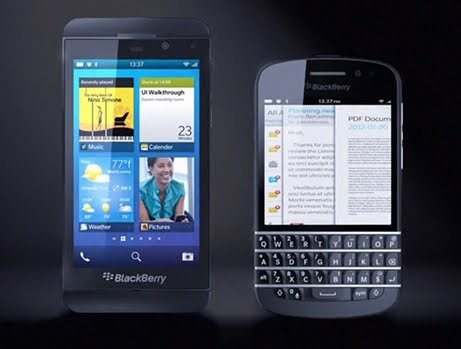
An internal marketing video from Research in Motion surfaced on Vimeo last night showing two upcoming BlackBerry 10 smartphones. The clip has since been pulled but not before CrackBerry.com was able to capture several screenshots of what we can expect to see in 2013.

The full touch screen L Series phone (codenamed London) has surfaced multiple times in the past and looks nearly identical to Dev Alpha phones that are currently in the hands of BB10 developers. Rumors have suggested this phone will ship with a 4-inch display operating at 1280 x 768 resolution.

Much more interesting, however, is the N Series phone (codenamed Nevada) which includes a smaller touch screen in addition to a full QWERTY keyboard. It’s our first time seeing this promised handset and well, it’s about what you’d envision it to be.

It looks similar to the BlackBerry Bold lineup sans physical shortcuts, optical track pad and send / end call buttons. Removing these physical buttons and replacing them with on-screen keys lends more real estate to the rumored 720 x 720 square display. The keyboard also appears to be flat rather than rounded.

According to the enthusiast site, RIM plans to market the phones with help from big names like JK Rowling, Lady Gaga and Ridley Scott. A spokesperson for RIM told Pocket-lint that they don’t comment on leaks / rumors / speculation but if we had to guess, these look to be the real deal.


Report by: Shawn Knight